
Durga Mantra: Ya Devi Sarva Bhuteshu
"Ya Devi Sarva Bhuteshu" is the best-known hymn to the Divine Mother as Durga. It comes from the Devi Mahatmya (Durga Saptashati) and is chanted as a litany: one refrain, repeated for each form in which the Goddess is understood to dwell in all beings.
Listen to Sample
Opening verses (9–13): salutations to the Goddess

Namo devyai mahādevyai śivāyai satataṃ namaḥ
Namaḥ prakṛtyai bhadrāyai niyatāḥ praṇatāḥ sma tām

Raudrāyai namo nityāyai gauryai dhātryai namo namaḥ
Jyotsnāyai cendurūpiṇyai sukhāyai satataṃ namaḥ

Kalyāṇyai praṇatāṃ vṛddhyai siddhyai kurmo namo namaḥ
Nairṛtyai bhūbhṛitāṃ lakṣmyai śarvāṇyai te namo namaḥ

Durgāyai durgapārāyai sārāyai sarvakāriṇyai
Khyātyai tathaiva kṛṣṇāyai dhūmrāyai satataṃ namaḥ
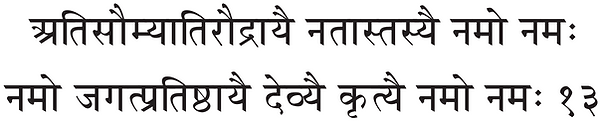
Atisaumyātiraudrāyai natāstasyai namo namaḥ
Namo jagatpratiṣṭhāyai devyai kṛtyai namo namaḥ
The refrain (verses 14–80)

Yā devī sarvabhūteṣu viṣṇumāyeti śabditā
Namastasyai namastasyai namastasyai namo namaḥ

Yā devī sarvabhūteṣu cetanetyabhidhīyate
Namastasyai namastasyai namastasyai namo namaḥ
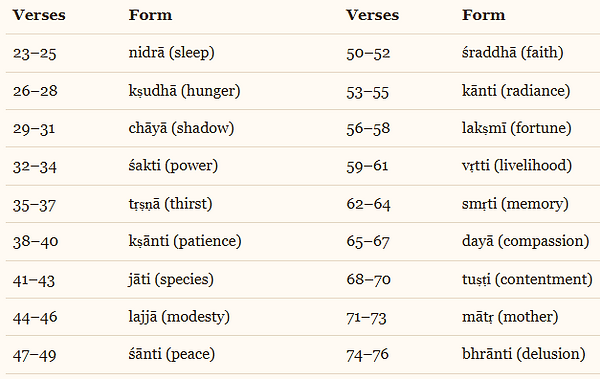
The line each time is: Yā devī sarvabhūteṣu [form]-rūpeṇa saṃsthitā, "the Goddess who abides in all beings in the form of [form]".
Closing verses (77–80)

Indriyāṇāmadhiṣṭhātrī bhūtānāṃ chākhileṣu yā
Bhūteṣu satataṃ tasyai vyāptidevyai namo namaḥ

Citirūpeṇa yā kṛtsnametadvyāpya sthitā jagat
Namastasyai namastasyai namastasyai namo namaḥ
Pronunciation notes
A macron (ā, ī, ū) marks a long vowel held about twice as long as a short one. ṣ and ś are both close to English "sh"; ṛ is a vowel-like "ri"; ṃ is a soft nasal; ḥ is a light breath after the vowel (namaḥ sounds like "namah-ha"). The repeated line Namastasyai is chanted evenly, with the same weight on each repetition.
When it is chanted
The hymn belongs to the worship of the Divine Mother and is especially associated with Navratri, the nine nights devoted to Durga, Lakshmi and Saraswati. It is also chanted at other times as a daily devotion.